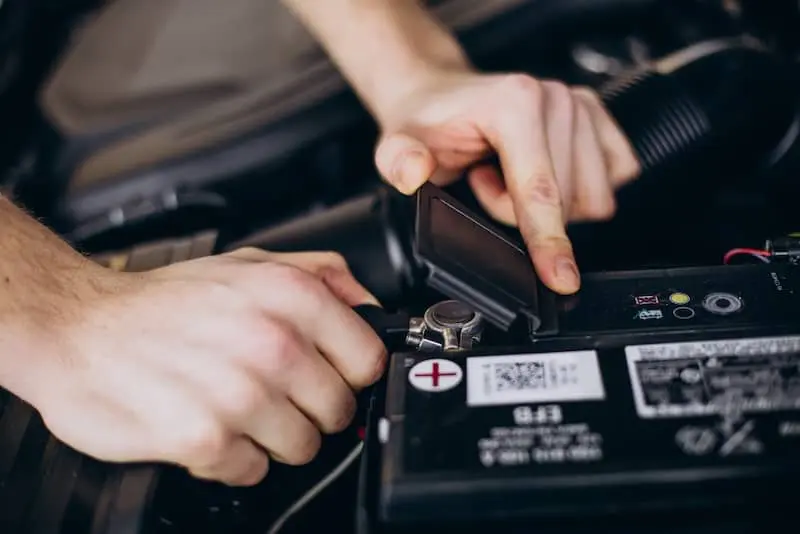
Choosing the right car battery is usually straightforward.
You pick the right size and CCA recommended battery that you find in your owner’s manual.
However, German-engineered cars are a different breed. German engineering is all about precision, and the battery in your BMW, Audi, Mercedes-Benz, or Volkswagen plays a critical role in ensuring everything runs smoothly, from ignition to onboard electronics.
If you’ve ever had to replace a battery in a German car, you’ve probably noticed that it’s not as straightforward as swapping out one battery for another of the same size. That’s because German vehicles often require batteries that are specifically matched to the car’s systems and performance standards. If you choose the wrong battery, you can affect not just the starting power but the entire operation of your vehicle.
Why Your German Car Is Different from the Start
German vehicles heavily emphasize electronics, from advanced infotainment systems to adaptive headlights and performance-driven ECU systems. These components place demands on your battery that just don’t exist in other cars.
Unlike some standard vehicles that only need to start the engine and power a few basic functions, your German car requires a battery that can maintain consistent voltage while supporting complex electronics even when the engine is off.
This means you can’t treat your German car like any other vehicle when it comes to battery selection. You need a power source that’s designed to meet higher electrical demands while staying reliable under varying driving conditions.
Matching the Right Battery Type to Your Car’s Needs
If you’re shopping for a battery, you’ll encounter several types: lead-acid, AGM (Absorbent Glass Mat), and lithium-ion, to name a few. For most German vehicles, especially newer models, AGM batteries are typically the go-to option.
AGM batteries are designed for high-performance and high-drain applications, making them ideal for luxury cars with complex systems. They’re more durable and charge faster. They’re also better suited for start-stop systems, which you’ll often find in modern German vehicles.
Let’s say you own a newer BMW with regenerative braking and an integrated start-stop system. Installing a standard battery can easily cause those features to malfunction or prematurely wear out your electrical components. On the other hand, AGM batteries can withstand these cycles, providing you with longer life and better overall performance.
Understanding Battery Ratings and Specifications
To choose the right battery, you’ll need to pay attention to the battery’s specs, particularly cold cranking amps (CCA), reserve capacity, and group size. German cars often require higher CCA ratings to handle both climate-related starting challenges and heavy electronic loads.
Group size refers to the battery’s physical dimensions and terminal layout. German automakers typically use European DIN or EN standards for these specifications, which may differ from standard U.S. formats. Using a battery with incorrect dimensions can result in poor fit, improper mounting, or even terminal clearance issues that could lead to electrical shorts.
Reserve capacity is equally important. It tells you how long the battery can supply power without the alternator. For a German car with extra features like heated seats, navigation, and parking sensors, you want a battery with ample reserve capacity so you don’t lose power prematurely when parked or idling.
Factory Coding and Battery Registration
One part of battery replacement that people often forget about is the process of registering your battery. This is especially important in German vehicles like BMWs and Audis. When you install a new battery, your car’s computer system needs to be told that the battery has been replaced. This process, known as battery registration, allows the vehicle to adjust its charging behavior based on the new battery’s capacity and condition.
If you skip this step, your alternator might overcharge or undercharge the battery, reducing its lifespan or even triggering dashboard warning lights. Some vehicles may even enter “limp mode” or experience strange electrical glitches.
You’ll want to work with a technician experienced in German cars offering luxury car maintenance near you who has the right diagnostic tools to handle battery registration. It’s not as simple as swapping out hardware. Taking care of your vehicle means using a trusted service provider to integrate that new hardware into the vehicle’s software environment.
Where You Buy Your Battery Matters
You might be tempted to purchase a battery from a general auto parts store, but this is one area where specialization pays off. Batteries sold for mass-market vehicles may not meet the quality or specification requirements for your German car. Even worse, they may not have the correct venting systems, thermal protection, or OEM approval.
Instead, your best option is to source the battery from a shop or dealership that understands German makes and models. These providers will ensure you get a battery that not only fits but is designed for optimal performance in your specific car. That way, you won’t compromise on power, compatibility, or safety.
Why the Right Battery Makes a Difference
Let’s say you’re shopping for a battery for your Audi S6. You find two options: a generic lead-acid battery at a local auto shop and a slightly more expensive AGM battery from a German car specialist. There may be some areas where going with the cheaper option is better, but your car’s battery isn’t one of those areas.
The cheaper battery can struggle to handle the electrical load, especially in cold conditions. You could find yourself dealing with frequent jump starts, flickering electronics, or even premature battery failure. Meanwhile, the properly matched AGM battery will last longer, support all the car’s features without a hitch, and save you the hassle of frequent replacements.
Don’t Ignore the Signs of a Failing Battery
Knowing when to replace your battery is just as important as choosing the right one. If your car is slow to start, you notice dimming lights, or your electronic features begin acting erratically, those are clear signs your battery may be reaching the end of its life.
You might also see warning indicators on your dashboard or receive messages related to battery condition through your infotainment system. German vehicles often come with sophisticated diagnostics that can detect voltage fluctuations well before a complete failure occurs.
Replacing the battery before it fails is always better than being stranded in a parking lot or garage. It ensures your car continues to operate smoothly and protects your other systems from potential voltage-related issues.
Protect Your Investment with the Right Battery
Choosing the best battery for your German vehicle means thinking beyond price tags and brand names. It’s about compatibility, performance, and protecting the investment you’ve made in a precision-engineered machine. To take things a step further, it’s just as critical to have your battery installed and registered by a qualified German car service in Salt Lake City or your area.
Whether you drive a Mercedes, BMW, Audi, or Volkswagen, the right battery and installation services support your car’s full potential, from effortless starts to seamless connectivity and performance on demand.
Video

Infographic
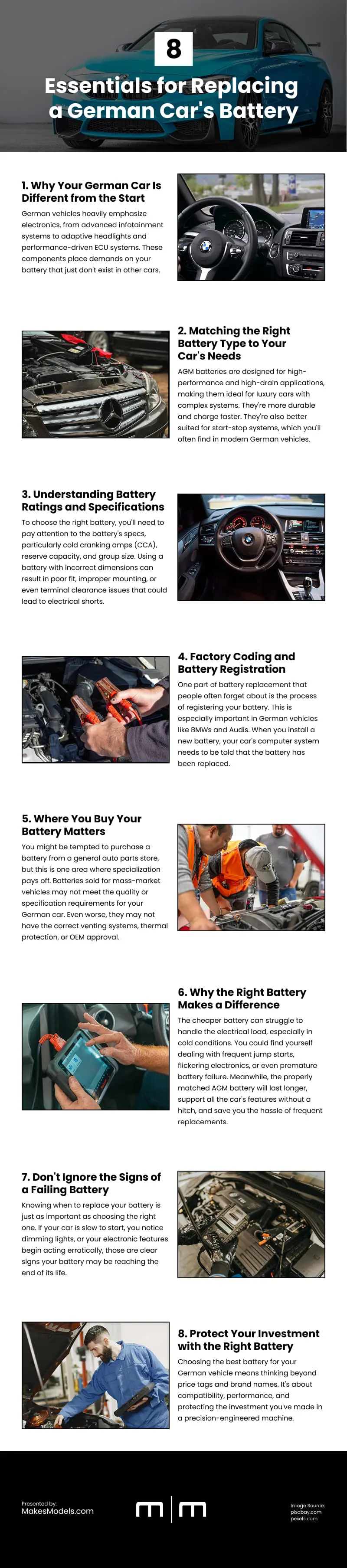
Replacing a battery in a German car is not just a quick swap; it requires a careful process to ensure the right match for your vehicle’s complex electrical systems. This infographic covers the essentials for replacing a German car battery.