Driving a BMW offers a refined mix of performance, handling, and luxury. But like any machine built for precision, it demands proper care to stay at its best. Whether you’re behind the wheel of a 3 Series, X5, or M model, your car is engineered to deliver a dynamic experience. That means certain parts wear differently than they would on a typical commuter car.
When you know the most common causes of repairs, you can anticipate issues before they become expensive problems. From engine concerns to suspension wear, understanding these patterns allows you to take a more proactive approach to ownership. That way, when you do need to find a BMW auto repair center near you, you can make an informed choice instead of just reacting under pressure.
Engine and Cooling System Issues
One of the more frequent repair areas for BMWs, especially older or turbocharged models, is the engine and cooling system. These components are tightly engineered, but they’re also under constant stress due to performance tuning and compact layouts.
You might encounter oil leaks from valve cover gaskets or oil filter housing seals. These are common and usually develop over time due to heat and pressure. Water pump failures also show up in many models, especially as they approach higher mileage. A faulty water pump or thermostat can lead to overheating, which is particularly risky in performance engines.
To avoid these issues, make sure you’re staying current with oil changes and checking fluid levels regularly. Watch for even small signs of leaking, such as residue under the car or a burning oil smell, because early detection prevents major repairs later.
Suspension and Steering Wear
BMWs are known for their tight handling, which is made possible by advanced suspension and steering setups. The downside is that these components experience significant wear over time, particularly if you enjoy spirited driving or deal with poor road conditions.
Control arm bushings, ball joints, tie rods, and sway bar links are all wear points. When these start to fail, you might notice clunking over bumps, uneven tire wear, or vague steering feedback. Left unaddressed, worn components can affect both safety and driving enjoyment.
Having your suspension inspected at regular intervals, especially after hitting a pothole or noticing changes in ride quality, goes a long way toward preserving your car’s feel on the road.
Electrical Glitches and Sensor Failures
Modern BMWs rely on a complex network of sensors and modules. While this tech delivers a premium experience, it also means more opportunities for electrical issues. Common problems include faulty oxygen sensors, malfunctioning window regulators, and iDrive glitches.
You might see warning lights that seem to come and go, or you could lose access to certain comfort features like climate control or navigation. While some electrical issues are minor, others can affect engine performance or safety systems.
You can reduce these problems by keeping battery terminals clean, avoiding aftermarket electronics that might overload circuits, and scanning your vehicle when warning lights appear. Even something as simple as a weak battery can cause systems to behave unpredictably.
Transmission and Drivetrain Concerns
BMW automatic transmissions are typically smooth and responsive, but they still require attention. Delayed shifting, hesitation, or hard gear changes can signal low transmission fluid or early mechanical wear. In xDrive models, transfer case and differential components also require fluid changes and regular inspection.
While BMW promotes lifetime fluid in some systems, regular transmission and drivetrain service is a smart preventative move. Making sure to flush fluids at recommended intervals and check for leaks helps you avoid bigger issues down the road, especially if you plan to keep the car long-term or drive it hard.
Brake and Tire Maintenance
Your brakes and tires take the brunt of your BMW’s sporty capabilities. Aggressive driving, heavy vehicles, and large wheels all contribute to faster wear. Brake pads and rotors on performance models tend to need replacement more frequently, while low-profile tires are more susceptible to damage from curbs and potholes.
To stay ahead of this, check brake pad thickness and tire tread regularly. Listen for any squealing or grinding sounds, and inspect your tires for uneven wear or sidewall damage. Rotating your tires and keeping them properly inflated not only improves longevity but also helps your car handle and stop the way it was designed to.
Preventative Tips to Minimize Repairs
A few consistent habits can make a big difference in avoiding costly repairs:
- Stick to a regular maintenance schedule that includes oil, coolant, brake fluid, and transmission service. Only work with a European car maintenance center near you whose technicians understand BMW platforms and have access to model-specific tools.
- Address warning lights and new sounds immediately. Don’t wait until symptoms worsen.
- Keep an eye on how your car feels. Changes in acceleration, braking, or ride comfort often hint at developing issues.
Routine attention helps preserve your car’s performance and safety systems. Even small issues, when left unchecked, can cascade into larger, more expensive repairs.
A Smarter Way to Drive a BMW
BMWs are engineered for people who care about how a car drives. But with that comes the responsibility to care for your vehicle at a higher level. You don’t have to be a mechanic to stay ahead of repairs; you just need to be a thoughtful owner. By learning what tends to go wrong and acting early, you can enjoy the best parts of BMW ownership while avoiding the worst.
Video
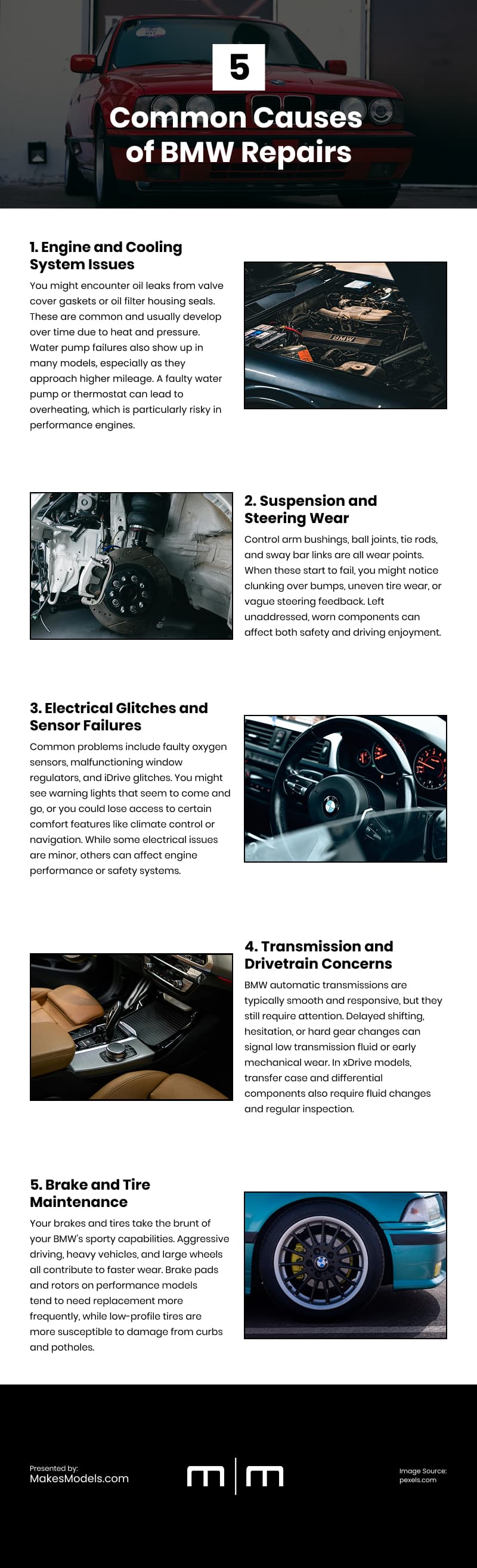
Infographic
Understanding common BMW repair issues helps owners take proactive maintenance steps, reducing the risk of costly breakdowns and improving long‑term performance. Explore this infographic to learn the most frequent causes behind BMW repairs.