Track days are the perfect playground for your McLaren. They offer a chance to experience your car’s capabilities in a controlled environment without speed limits or traffic. To spend a day on the track is to experience what your McLaren was built for.
But before you fire up the twin-turbo V8 and chase apexes, you need to make sure your car is ready to perform under pressure. A track session pushes every system in your car to its limit. If anything’s off, it can sideline your day, or worse, put your McLaren in the pit for weeks. Let’s walk through what you need to check before heading to the paddock.
Start With a Systems Health Check
Your McLaren may feel great on the street, but that doesn’t mean it’s ready to run flat-out for twenty minutes at a time. Start by checking fluids, including engine oil, brake fluid, coolant, and transmission fluid. High temperatures are inevitable on track, and you need fresh, correctly filled fluids that can handle it. Look for any signs of leaks or degradation.
Scan for codes using a proper diagnostic tool. Even if the check engine light isn’t on, a fault in a performance-related system can limit output or disable critical functions. Track days aren’t the place to gamble on a mystery fault or old brake fluid that’s borderline boiling.
Tires and Brakes: Your First Line of Defense
Tires are your only contact with the track, so they need to be in top shape. Check tread depth, sidewall integrity, and, most importantly, tire pressure. For track use, your cold pressures will rise significantly, so start a bit lower than your normal street settings and monitor them between sessions.
Brake pads should have plenty of life left. If they’re under 50%, swap them before you go. Track braking is aggressive and repetitive; pads wear faster than you think. Make sure your rotors are smooth, not scored, and that you’re using high-temp brake fluid with a recent flush. A spongy pedal feel can be a day-ruiner on the track. If any of these items aren’t in good condition, get your car to a McLaren repair shop near you before risking a drive on the track.
Inspect Suspension and Chassis Components
A loose suspension component might not show up during daily driving, but it can cause major instability at high speeds. Raise the car and check control arms, bushings, end links, and shock mounts for wear or movement. Tighten any suspension fasteners to spec. Also inspect wheel bearings. If there’s any play, you’re risking serious damage at track speeds.
While you’re under the car, give your underbody and aero components a once-over. Front splitters, diffusers, and undertrays must be securely fastened. A loose piece of aero at 140 mph is embarrassing, but more importantly, it’s dangerous.
Battery, Cooling, and Charging Systems
McLarens, like most modern supercars, rely on sensitive electronics. A weak battery or alternator issue can trigger limp mode or cause total shutdown. Check your battery’s voltage and charging rate. Ensure all fans activate properly and that radiator fins are clean and unobstructed.
Track driving puts an enormous load on cooling systems. Any weakness, whether it’s a failing hose clamp or a slight coolant seep, can turn into a failure under heat soak conditions. Take time to look closely. If you’re unsure about any of these factors, take your McLaren to a trusted exotic vehicle diagnostic service in Salt Lake City or your area.
Don’t Overlook Driver Prep
You’re part of the machine, too. Make sure you bring appropriate gear for your track day: helmet, gloves, shoes, and any other requirements specified by the track. Hydrate well, and if it’s your first time, consider booking a ride-along or instructor session. The more prepared you are, the better your experience will be.
Your seating position also matters. If you’re sliding in your seat or struggling with pedal feel, adjust before you arrive. Also, remove unnecessary items from the cabin and trunk. Loose objects can shift under hard braking and cornering and create dangerous distractions or hazards.
Track-Specific Settings and Adjustments
If your McLaren has adaptive suspension, aero, or track modes, review how these systems behave. Many track day regulars adjust stability control thresholds, damper stiffness, or even reduce rear wing angle depending on the track. Know your car’s settings ahead of time.
Make note of tire wear indicators and heat cycling as you run sessions. Having a basic pressure gauge and infrared thermometer on hand allows you to fine-tune grip and avoid excessive wear. Proper cooldown laps and pit procedures can preserve your brakes and engine for the next outing.
Complete the Checklist, Conquer the Track
Your McLaren was engineered with track use in mind, but only when everything is dialed in. Track prep isn’t about being paranoid. It’s about respect for your car, your safety, and your time.
If you’re looking to tune your McLaren even further for performance, there are smart, safe ways to elevate its capabilities beyond factory settings. But that only comes after you’ve checked every box. So go in prepared and enjoy everything your McLaren was designed to deliver.
Video

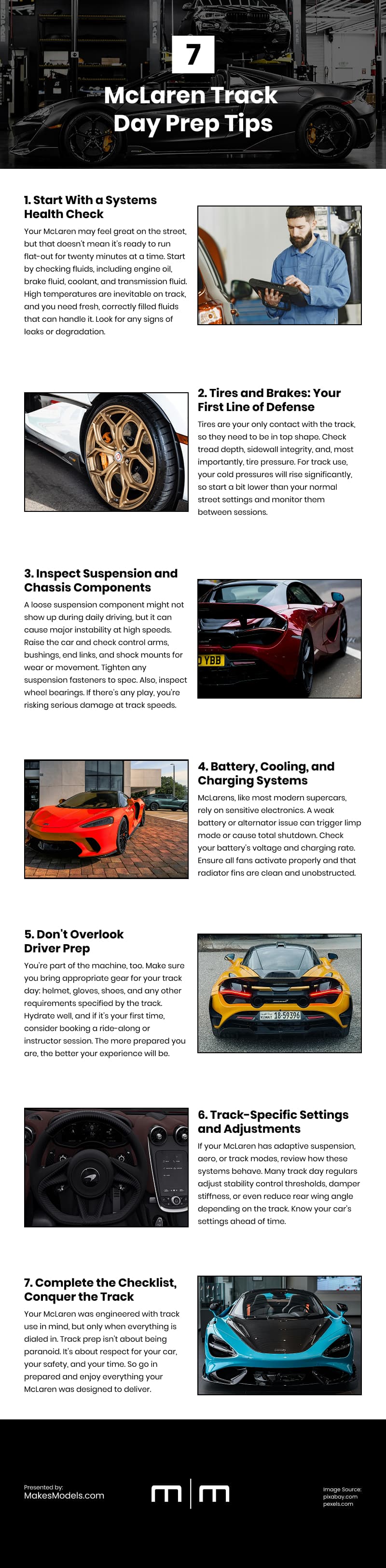
Infographic
Track days let you push your McLaren to its limits in a controlled environment, but proper preparation is essential for peak performance. This infographic shares key tips to help you get your McLaren track‑ready and maximize every lap.