When you drive a high-end car, especially a European or exotic brand, every detail matters. Emission tests might seem like just a formality set out by the government. But they actually play a significant role in your vehicle’s long-term health and performance. Emission tests ensure your engine is running cleanly and efficiently and can highlight early issues before they become costly problems.
If you’re used to performance tuning or custom modifications, emission standards can become tricky. That’s why it’s crucial to understand how your car’s emissions system works and how to keep it in check. You don’t want your vehicle flagged for non-compliance. Keeping your high-end car in pristine condition is a priority, and understanding emissions testing is an essential part of your investment.
Understand What Gets Tested
When you go for a luxury car emissions testing service in Salt Lake City, a technician scans your vehicle’s onboard diagnostics system (OBD-II) to identify fault codes related to your emissions system. In many cases, your car doesn’t even need to be driven. Data pulled directly from the OBD-II port gives testers everything they need.
In some areas or older model tests, the technician may use a tailpipe probe to analyze gases like carbon monoxide (CO), hydrocarbons (HC), and nitrogen oxides (NOx). These emissions are tightly regulated, and luxury engines with tight tolerances still need to stay within strict ranges.
You’ll want to make sure your oxygen sensors, catalytic converters, EVAP system, and EGR valves are functioning properly. If any of those systems are failing, it will likely trigger a check engine light or a stored code. Either of these can cause an automatic failure.
Common Triggers That Lead to Failed Emission Tests
Several factors can cause even high-performance vehicles to fail emission testing. One of the most common is a loose or missing gas cap, which can affect fuel vapor containment and trip the EVAP system.
Another issue is a recently cleared diagnostic code. If you’ve had service work done or cleared a warning light yourself, the system needs time to reset. Your OBD system must complete a full set of “readiness monitors” before passing. Driving your car through a complete drive cycle can help reset these parameters.
Failing sensors, especially oxygen sensors, can also lead to inaccurate fuel-to-air mixtures and result in higher emissions. Even luxury performance engines aren’t immune to these kinds of issues, and your car might not show noticeable signs until the test.
How to Prepare Before the Test
You don’t want to show up unprepared, especially with a high-end car that may attract closer scrutiny. Here’s how you can make sure everything is in order before heading to the inspection station:
- Drive your car regularly before the test. Letting it sit can cause the battery to drain or interfere with system readiness monitors. Drive your vehicle at varying speeds to allow all systems to function and log proper data.
- Check for warning lights. Any illuminated check engine light means an automatic failure. Even if your car feels fine, it’s a good idea to scan it for codes ahead of time.
- Top off your fuel. Running your car with low fuel can interfere with some diagnostic systems, especially the EVAP system. Keep your tank at least 30–70% full prior to testing.
- Warm up your engine. Cold starts can temporarily increase emissions. Arrive at your test with the engine fully warmed so sensors and catalytic converters are operating optimally.
Being proactive puts you in control. It’s not just about passing the test, but also about protecting your vehicle’s long-term performance and value.
Pay Attention to Modifications
If you’ve made any performance upgrades, especially those involving the exhaust system, turbocharger, or air intake, be cautious. While many modifications might improve horsepower or throttle response, they can unintentionally throw off emissions readings or OBD diagnostics.
Aftermarket parts that remove or bypass emissions components, like straight pipes in place of catalytic converters, are not only illegal in many states but can also cause your car to fail the test outright. Even high-performance software tunes can cause emissions monitors to read as “incomplete.”
Before any inspection, consider having your vehicle assessed by a technician familiar with exotic and European vehicles. They’ll understand how to align performance enhancements with emissions compliance.
What to Do If You Fail the Emission Test
Failing doesn’t mean disaster, but it does mean you need to take action. First, review the diagnostic report provided at the testing site. It should outline which systems failed and whether they were due to a monitor not being ready, a stored code, or an emissions reading that exceeded allowable limits.
Once you know what’s wrong, seek out a luxury and exotic car maintenance service near you. These cars require more than just generic fixes. A shop with diagnostic tools and factory-level software for brands like Porsche, McLaren, Audi, or BMW will be best equipped to make the right adjustments.
After repairs, you may need to complete a full drive cycle to reset readiness monitors before your vehicle can be retested. Ask the technician for tips on completing that process efficiently.
The Value of Ongoing Maintenance
While emissions tests are only required infrequently, they can act as checkpoints for your engine’s health. Regular diagnostics, fluid checks, and sensor calibrations help ensure your engine stays responsive and compliant.
Preventive care also protects your investment. Emissions failures that go unaddressed can harm fuel economy and even damage the engine over time. High-performance vehicles deserve meticulous attention to detail, especially when it comes to emissions compliance.
Partnering with specialists who understand how European and exotic vehicles operate gives you peace of mind. Don’t think of it as just passing a test. You’re preserving the precision engineering that defines your car.
Video
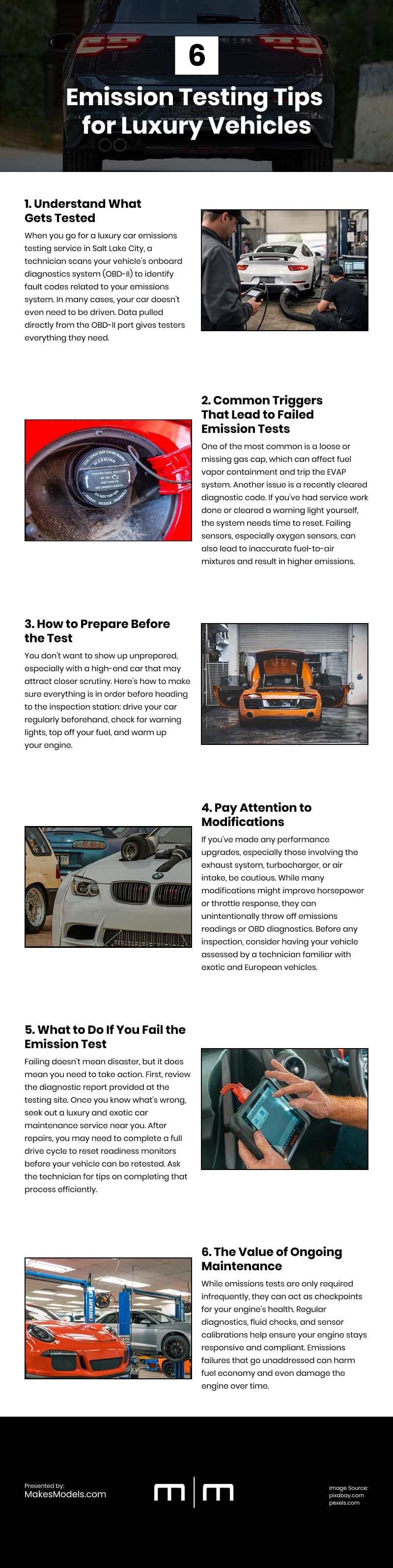
Infographic
For owners of high‑performance or modified luxury vehicles, understanding emissions testing is essential for staying compliant and protecting long‑term value. This infographic shares key tips and considerations tailored specifically to luxury‑vehicle emissions testing.