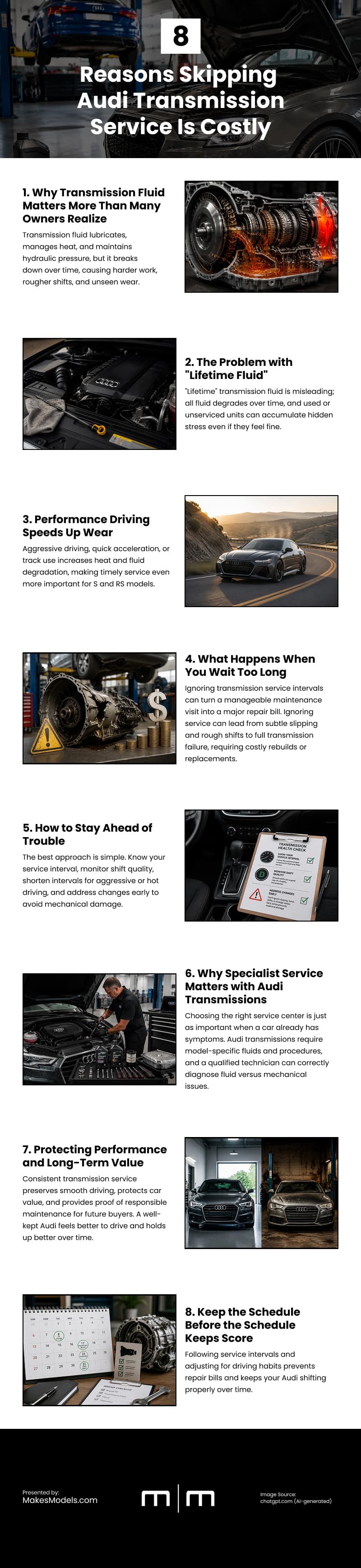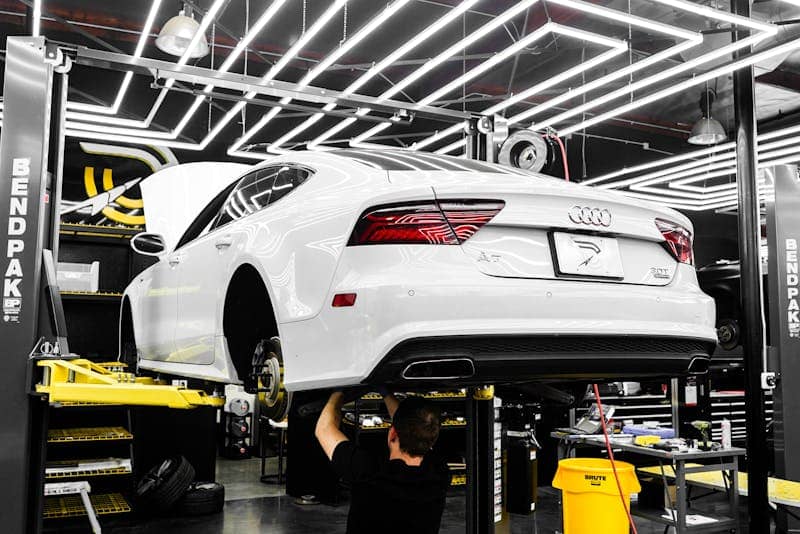
Your Audi’s transmission works hard every time you drive. It manages power, controls shift timing, and helps deliver the smooth, responsive feel that makes an Audi different from an ordinary daily driver.
When it’s working well, you barely think about it. But that’s exactly why so many owners overlook it until something starts to feel wrong.
Transmission service is one of the most important maintenance items on an Audi, especially if you plan to keep the car for the long haul. Many models need transmission fluid service around every 40,000 to 60,000 miles.
Yet plenty of owners still believe in the old idea of “lifetime fluid.” That phrase has caused a lot of expensive damage over the years. Here’s how to avoid falling into that trap and paying thousands in repairs.
Why Transmission Fluid Matters More Than Many Owners Realize
Transmission fluid does more than lubricate moving parts. It also helps manage heat, supports hydraulic pressure, and keeps internal components working together cleanly and smoothly. In a modern Audi, transmission fluid plays a part in every second the car is on the road.
Over time, fluid breaks down. Heat cycles, friction, and contamination gradually change how well it performs. Once that happens, the transmission has to work harder to do the same job.
That process usually happens slowly. You may not notice a dramatic change right away. Instead, the car starts to feel a little less polished. A shift might hesitate. Another might land harder than usual. Heat builds faster. Wear increases in places you can’t see. Those small changes often show up before major failure, and they’re your signal to stop waiting and start looking for an Audi transmission service near you as soon as possible.
The Problem with “Lifetime Fluid”
Audi owners hear the phrase “lifetime fluid” often enough that it starts to sound official and safe. But in practice, it creates false confidence. No fluid maintains the same protective qualities forever, especially inside a performance-oriented transmission that deals with heat and load on a daily basis.
The word “lifetime” also depends on how the manufacturer defines the life of the component. That definition may not match how long you want to keep your car. If you plan to drive your Audi well past the warranty period, you need a more realistic view of maintenance.
A good example is the owner who buys a used Audi at 70,000 miles and assumes the transmission is fine because it still shifts. If the fluid was never serviced, the wear has already started. The car may feel acceptable during a short test drive, but hidden stress is still building inside the unit.
Performance Driving Speeds Up Wear
Audi builds cars that invite the kind of driving thrills many owners crave. Quick acceleration, strong highway pulls, canyon roads, and occasional track use all put more demand on the transmission. That extra demand increases heat, and heat is one of the biggest reasons transmission fluid loses effectiveness.
If you drive your Audi hard, your service schedule matters even more. A car that sees repeated full-throttle pulls or aggressive backroad driving doesn’t live the same life as one used for calm suburban commuting. The fluid ages faster, and the transmission depends on fresh protection to stay sharp.
This is especially relevant for owners of S and RS models, or any turbocharged Audi that encourages you to use the power often. Driving style changes maintenance reality. If you enjoy the performance your Audi offers, you should expect to support that experience with tighter service discipline.
What Happens When You Wait Too Long
Ignoring transmission service intervals can turn a manageable maintenance visit into a major repair bill. The most common early symptoms are slipping gears, rough shifts, delayed engagement, or inconsistent behavior when the car is cold versus fully warmed up.
Those symptoms are easy to dismiss at first. You may tell yourself the car is just aging, or that one rough shift doesn’t mean much. But that thinking gets expensive fast. Once heat and friction start damaging internal components, fluid service alone may no longer solve the problem.
In the worst cases, neglected service ends in complete transmission failure. At that point, you’re not talking about routine maintenance anymore. Instead, you’re dealing with a rebuild or replacement, along with the downtime and cost that come with it. That’s a steep price to pay for ignoring an interval your car already gave you.
How to Stay Ahead of Trouble
The best approach is simple. Know your Audi’s transmission type, know the recommended service interval, and treat that interval as real. If your model falls into the 40,000 to 60,000 mile range, plan ahead before you get there.
You should also pay attention to how the car feels between service visits. Smooth shifting is part of your baseline. If that smoothness changes, don’t wait for the problem to become obvious.
A few habits make a real difference:
- Check your service records so you know whether the transmission has actually been maintained, especially if you bought the car used.
- Shorten your interval if you drive aggressively, tow, or spend a lot of time in heat and stop-and-go traffic.
- Address shift quality changes early while the problem may still be fluid-related instead of mechanical.
Those steps are basic, but they protect one of the most expensive systems in the car.
Why Specialist Service Matters with Audi Transmissions
Audi transmissions aren’t generic. They rely on specific fluids, correct fill procedures, and model-specific service methods. Getting the service done correctly matters as much as doing it on time.
A rushed fluid change or the wrong fluid choice can create new problems instead of preventing old ones. That’s one reason Audi owners do better when they choose a qualified European car preventive maintenance service in Salt Lake City or your area. These technicians are highly familiar European platforms and know what each transmission requires.
Choosing the right service center is just as important when a car already has symptoms. Rough shifts may point to fluid degradation, software adaptation issues, or deeper wear. The right technician can separate those possibilities more accurately than a shop treating the car like any other automatic.
Protecting Performance and Long-Term Value
Transmission service isn’t just about avoiding failure. It’s also about preserving what makes the car enjoyable in the first place. Your Audi should feel smooth, quick, and predictable. Fresh fluid helps maintain that character.
It also protects value. If you sell the car later, documented transmission service helps prove that you maintained it responsibly. Buyers who understand German cars look for that kind of history because they know how expensive neglect can become.
A well-kept Audi feels better to drive and holds up better over time. That outcome usually comes from consistent maintenance, not luck.
Keep the Schedule Before the Schedule Keeps Score
Your transmission gives you plenty of warning before it becomes a major expense, but only if you’re paying attention. Follow the service interval, adjust it when your driving habits call for it, and treat fluid service as essential maintenance rather than optional upkeep.
That decision does more than prevent repair bills. It keeps your Audi shifting the way it should mile after mile.
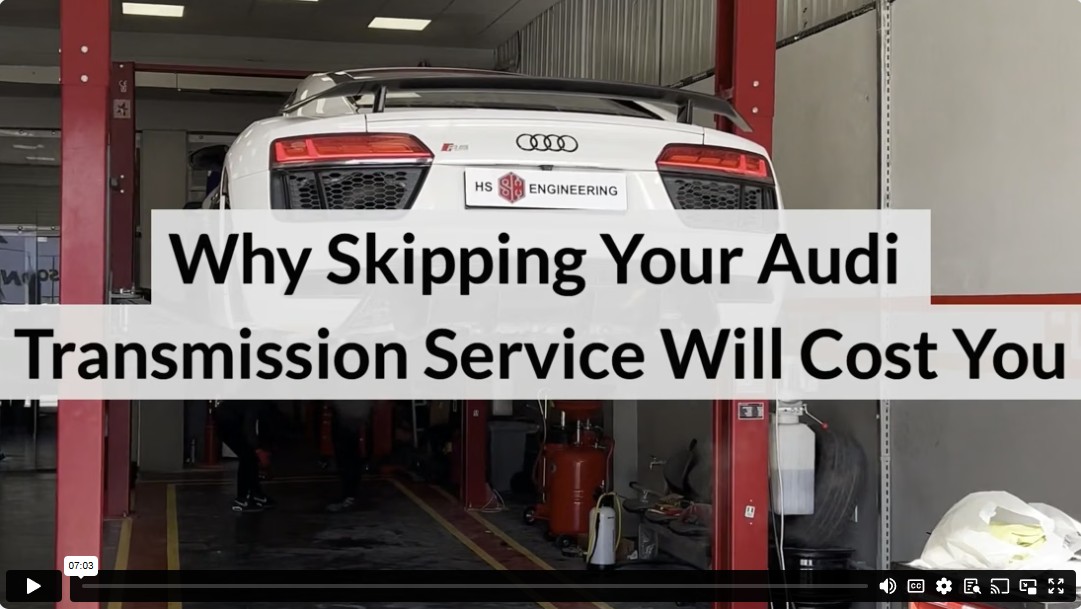
Video
Infographic
Skipping transmission service on your Audi can quietly lead to rough shifts, costly repairs, and a shorter lifespan. Read on to see how the infographic below reveals eight reasons skipping Audi transmission service costs you far more down the road.