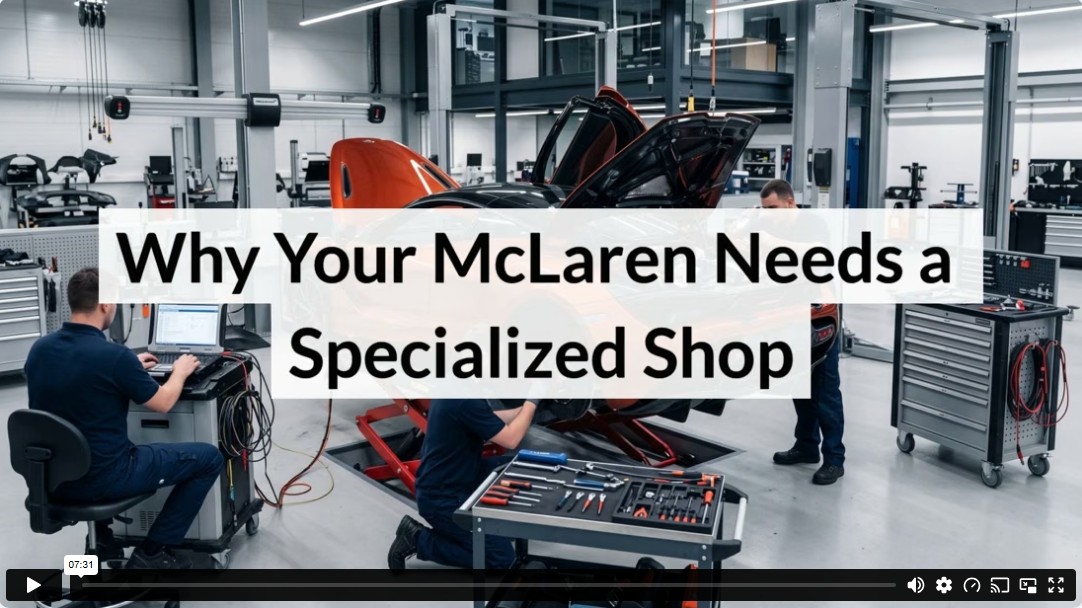
The gap between a performance car and an ordinary one runs deeper than straight-line speed. It’s in the engineering. McLaren pushes that gap to an extreme, and the same technology that makes their cars so rewarding to drive also makes them one of the most demanding to service correctly.
Every system is designed to work as part of a larger whole, from the suspension and aerodynamics to the software that manages them behind the scenes. As McLaren continues to refine its technology through software updates and new model generations, servicing these vehicles requires more than standard diagnostic equipment and general automotive experience.
Choosing the right shop is just as important as keeping up with routine maintenance if you want your McLaren to perform the way its engineers intended.
McLaren’s Technology Moves at Its Own Pace
McLaren doesn’t build a car and leave it alone. The company releases regular software updates for its vehicles, refines system calibrations between model generations, and layers new technology into each new car it produces.
That means your McLaren after a software update may respond differently in certain driving conditions than it did at delivery. That’s intentional. The car is designed to improve over time.
McLaren’s technology also evolves significantly from one model generation to the next. Each new car introduces new systems or changes how existing ones interact. The Artura, for example, added a full hybrid powertrain to the lineup, pairing an electric motor alongside the combustion engine in ways earlier McLarens never had to manage.
In a service context, that constant forward motion makes things more complicated. A shop working with outdated software doesn’t have an accurate picture of how your car is configured to behave. What they’re reading on their screen may not match what the car is actually doing. And a shop that only knows one generation of McLaren well may still find itself unprepared when the next one arrives.
That’s part of why you’ll need to take your McLaren to a shop specializing in exotic car maintenance near you. Along with having experienced techs, the shop you choose needs to have the technology to figure out exactly what’s going on with your vehicle.
What Sets McLaren’s Systems Apart
McLaren’s major systems don’t work in isolation. They communicate with each other constantly.
The suspension adjusts in real time based on what the car senses at each wheel, what speed you’re traveling, and which driving mode you’ve selected. The aerodynamic components, including the rear wing and front sections, change position automatically at speed to manage downforce and stability.
McLaren’s onboard computer, built specifically for their cars and not shared across other brands, coordinates all of this simultaneously and tracks it continuously.
Most manufacturers source their onboard computers from suppliers who build similar systems across many brands. McLaren develops their own. At a shop unfamiliar with McLarens, the patterns a technician has learned on other vehicles don’t transfer directly because the logic underneath is different.
On hybrid McLarens, an electric motor joins the combustion engine. The two have to stay in sync with each other, the battery system, and the car’s overall power management. These are fully integrated systems, not independent components running side by side. They influence each other.
Diagnosing a problem in one part of that system often requires understanding what the others are doing at the same time. A suspension fault might trace back to a software conflict. A power delivery issue might involve how the combustion engine and electric motor are communicating.
Reading the fault code tells you where something flagged. Understanding why it flagged requires seeing the full picture.
Why Most Shops Fall Behind
Standard diagnostic tools are built to read a wide range of vehicles, and they do that well for most cars. But on a McLaren, they pick up fragments. They surface fault codes but can’t always interpret them in the context of McLaren’s own software, current calibrations, or the way the car’s systems are connected to each other.
A technician filling in those gaps has to rely on inference. Sometimes that inference works. But when it doesn’t, the result is a repair that addresses the surface symptom while the actual cause is still there. The warning light goes off. You take your car home. Three weeks later, the same light comes back on.
Experience plays a significant role too. The cars are engineered in ways that don’t carry over from general automotive work. A shop that sees one or two McLarens a year doesn’t develop the depth of familiarity that accurate service requires. Each visit becomes a relearning exercise rather than an informed assessment.
Software access is another factor. McLaren issues updates on their own schedule. A shop without current access to those updates is diagnosing a car that may have moved well beyond what they’re reading.
The Real Cost of an Incomplete Diagnosis
When a shop can’t fully read what a McLaren is communicating, the most common outcome is a partial fix where the underlying cause isn’t treated, so the warning light comes back on after the shop is done.
That’s the version you can see. The harder version to spot is when the shop addresses the wrong thing entirely. The car gets serviced, something gets replaced, and the actual issue keeps going.
In a machine where systems interact this closely, an unresolved problem puts pressure on the parts around it. A software conflict can mask a developing mechanical issue until that issue gets worse. A missed calibration problem can accelerate wear across connected components.
There’s also a straightforward cost in time and money. Bringing a car back for the same issue twice means waiting through a second round of diagnostics. And if the underlying problem has been multiplying, it also means facing a larger repair than the first visit would have required.
McLaren owners expect their cars to perform at a high level. Getting the diagnosis right the first time is part of protecting that.
What Proper McLaren Service Actually Looks Like
A specialized McLaren maintenance shop in Salt Lake City or your area has invested in the ability to handle these repairs correctly. That starts with McLaren-specific diagnostic tools, the same software the factory uses to read what a car is doing across all its integrated systems. General scan tools don’t produce the same depth of information, and for a car this interconnected, an incomplete picture produces incomplete service.
Training is the next piece. Working on McLarens isn’t only a matter of mechanical skill. It requires specific familiarity with how McLaren’s systems are engineered, how they behave when something goes wrong, and what correct procedure looks like for each model. That knowledge comes from continuous, hands-on work with these cars, not from a broad automotive background.
Technicians also need access to McLaren’s software. McLaren issues updates regularly, and a shop needs current access to stay aligned with how the car is actually configured. Shops that fall behind on updates are working from yesterday’s information on a car that’s moved on.
Getting all three of these right requires treating McLaren as a specialty rather than an occasional job. Shops that do this well tend to be the ones McLaren owners return to, because the difference is obvious when the car comes back performing the way it should.
Where Your McLaren Belongs
Finding a shop that actually has the tools, trained technicians, and current software access to do the job right isn’t always easy. The right facility makes that investment before you walk in the door, not after you’ve already brought the car in twice for the same problem.
When it comes to McLarens, precision isn’t optional. Their tech is simply too complex for standard shops to keep up with. But when you find a shop that specializes in exotic car maintenance, you can rest assured that every problem, not just the warning lights, will be addressed to keep your McLaren driving at peak performance.
Video