
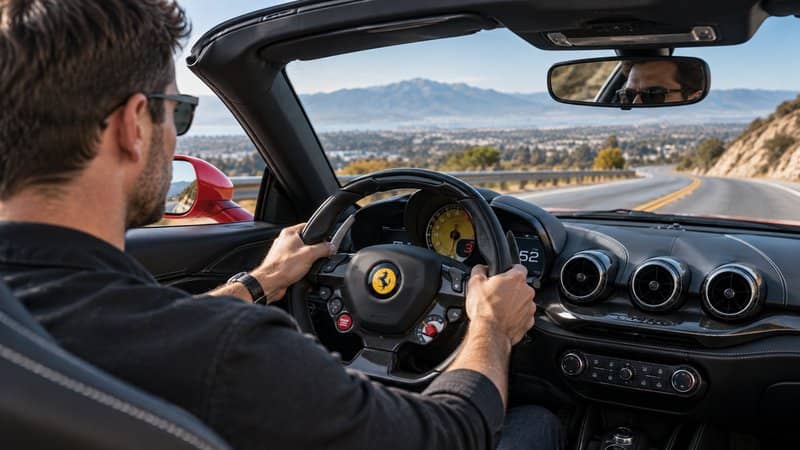
A test drive tells you more about a pre-owned exotic car than any photo, listing description, or even a quick walk-around. It’s where the car either confirms what the seller told you or reveals something they didn’t mention.
If you’re looking at places to buy used exotic cars, treat the test drive as a diagnostic tool, not just a chance to feel the acceleration. This makes the difference between a smart purchase and an expensive surprise.
Start With How the Engine Responds
Pay close attention to throttle response from the very first press of the pedal. A healthy exotic engine should respond immediately and predictably. There shouldn’t be any hesitation, stumbling, or delay between input and power delivery. Any lag you notice is something to ask about.
Run the engine through its full range if conditions allow it. Low-end response, mid-range pull, and top-end power should all feel consistent with what you’d expect from that specific model. Notice whether the car feels strong at low speeds but flat higher in the rev range, or vice versa. If so, that inconsistency could point to anything from a sensor issue to something more significant with the engine’s internals.
Listen closely while you do this. A well-maintained exotic engine has a distinct, consistent sound at idle and under load. Knocking, ticking, or a whine that changes with RPM are all important to flag for a closer look during a professional inspection.
Evaluate the Brakes Under Real Conditions
Brakes on an exotic car need to perform consistently under repeated hard stops, not just the occasional gentle press in traffic. Find a safe stretch of road and test braking from a moderate speed a few times in a row. Pay attention to pedal feel each time.
A firm, consistent pedal that delivers the same stopping power on the third stop as it did on the first is what you want. Take note of a pedal that feels spongy, sinks lower with each application, or requires more pressure to achieve the same result. These symptoms can indicate worn pads, degraded brake fluid, or a more serious hydraulic issue.
Also notice whether the car pulls to one side under braking. Pulling can point to uneven pad wear, a sticking caliper, or an alignment issue. Verify each of these with a technician before you commit to the purchase.
Pay Attention to Suspension and Ride Quality
Drive over a variety of surfaces if you can, including a rougher patch of road, a highway on-ramp, and a few turns taken at a moderate pace. Suspension components wear differently depending on how a car was driven, and a test drive over mixed conditions reveals more than a straight line ever will.
Listen for clunks or rattles over bumps. These often point to worn bushings, ball joints, or sway bar links. Notice whether the car feels planted and controlled through turns or whether it feels vague, floaty, or unsettled. A properly maintained exotic should feel connected to the road, with body movement that matches the input you’re giving it.
Ride quality should also feel intentional rather than harsh or unpredictable. A firm ride is normal for many performance models, but a ride that feels harsh over small bumps or unsettled over larger ones may point to worn shocks or dampers that need replacing.
Check the Transmission’s Shift Behavior
Whether the car uses a dual-clutch transmission, a traditional automatic, or a manual gearbox, shift quality tells you a lot about how the car has been maintained and driven. Gear changes should feel smooth and confident. There shouldn’t be any hesitation, harsh engagement, or slipping between gears.
Test the transmission under a few different conditions: light acceleration, a firmer press of the throttle, and a quicker shift under moderate load (if it’s safe to do so). Pay attention to how quickly and cleanly the car responds each time. Note any delay between your input and the shift itself, especially in a dual-clutch car where shifts should feel nearly instantaneous.
If you notice grinding, hesitation, or a shift that feels rough compared to what that specific model is known for, treat it as a reason to get a professional opinion before moving forward.
Start the Car Cold, Not Just Warmed Up
Many sellers have the car running and warmed up before you arrive, which can mask problems that only show up on a cold start. Ask to start the engine yourself from completely cold if possible.
A cold start reveals things a warm engine hides. Listen for extended cranking before the engine catches, unusual noises in the first few seconds of idle, or a rough idle that takes longer than expected to smooth out.
Check the exhaust for excessive smoke as well. A brief puff on startup can be normal in some models, but sustained blue or white smoke often points to an issue you’ll need to investigate further.
This same principle applies to the transmission and climate systems. A transmission that shifts fine once everything’s warmed up may behave differently in the first mile of driving. A climate system that blows cold air five minutes in doesn’t tell you whether it cools properly right away. Testing systems in their least favorable state gives you a more honest picture than testing them at their best.
Check Electrical Systems and Warning Lights
Before you start driving, take a moment with the car parked to check every electrical system methodically. Cycle through all the lights, including:
- Headlights
- Brake lights
- Turn signals
- Any exterior lighting specific to the model
Exotic cars often use complex lighting systems, and a failed module can be costly to replace.
Watch the dashboard closely as the car starts. The warning lights should briefly light up during the startup sequence and then turn off. Make sure to write down any lights that stay on, flicker intermittently, or appear partway through your drive. Ask about them directly, even if the seller has an explanation ready.
Test the Technology and Comfort Systems
A thorough test drive covers more than mechanical performance. Exotic cars carry sophisticated technology, and problems here can be just as costly to resolve as a mechanical issue.
- Infotainment and connectivity: Confirm the touchscreen responds properly, navigation loads correctly, and any paired connectivity features work as expected.
- Climate control: Run the air conditioning and heat through their full range to confirm both cool and warm air properly, with no unusual smells or inconsistent airflow.
- Driver assistance features: Test adaptive cruise control, lane-keeping assistance, or parking sensors if the car is equipped with them. These systems can be expensive to repair if a sensor or module has failed.
Small glitches in any of these areas might seem minor compared to engine or transmission concerns, but repairs on exotic-specific tech systems can carry a hefty price tag.
Match the Drive to the Paper Trail
Everything you notice during the test drive should line up with the car’s documented service history. If the seller claims recent brake work but the pedal feels soft, or the maintenance records show a recent transmission service but shifts feel hesitant, investigate that mismatch before you go any further.
A service history that matches what you experience behind the wheel builds confidence in the car and the seller. A history that contradicts your own impressions is a signal to slow down, ask more questions, and consider a professional pre-purchase inspection before finalizing anything.
Trust the Drive, Then Verify It
A test drive is your best opportunity to evaluate an exotic car the way it’s meant to be driven, and it often reveals more than a static inspection ever could.
Remember to always confirm your impressions behind the wheel with a technician who knows the specific make and model. Find a center that specializes in exotic car maintenance in Salt Lake City or your area to get the best evaluation. When you’ve got the combination of an expert tech and the exotic car you’ve always wanted, you can drive away with both excitement and complete peace of mind.