
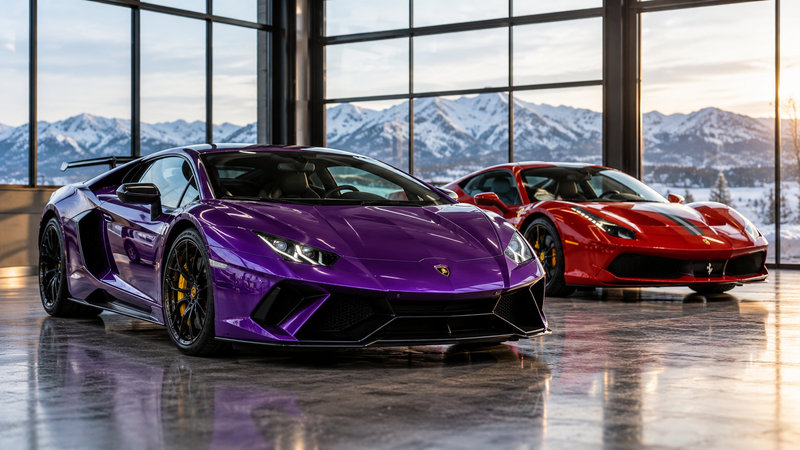
Picture two supercars: same model, same year, same mileage, same clean condition. One sells for tens of thousands more than the other. Why?
More often than not, the difference comes down to spec: the specific combination of color, trim, and factory options the car was built with.
Whether you’re shopping for used supercars near you or selling the one in your garage, you’ll want to know about specs. Once you know which details buyers pay extra for, you can look at any car, including your own, with a sharper eye.
Why Rarity Is a Big Deal With Exotic Cars
With an everyday car, value mostly comes down to three things: mileage, condition, and service history. Exotic and collector cars are judged on those same three things. Rarity adds a fourth, and it can push the price up or down in a big way.
Serious enthusiasts and collectors want a car that stands apart from the thousands of similar ones built in the same generation. At the high end of the market, plenty of cars are clean and well maintained. Once condition is a given, rarity is one of the few things left that makes one car more desirable than the next.
It comes down to supply and demand. A car with an unusual mix of features has fewer comparable cars on the market, so there are fewer alternatives for a buyer to choose instead. That gives the seller more room to ask for a premium.
This also changes how a car holds value over time. Most cars lose value on a fairly predictable curve. A rare, well-documented supercar can hold its value much better. Some even gain value over the years because so few like it exist.
Rare Colors and Custom Finishes
Paint is one of the easiest ways for a supercar to stand out, and it can be one of the most valuable. Several manufacturers let original buyers order colors that never appear on the standard options list. Porsche calls its version Paint to Sample, and Ferrari offers custom colors through its Tailor Made program.
A car painted in one of these rare shades, especially one that only a handful of cars wear, usually draws more interest from collectors than the same model in a common color. The color becomes part of the car’s story.
Buyers who fall for a rare color will often try to confirm just how rare it is. Owner registries and production records for the model can show how many cars left the factory in that shade. A seller who can back up the color with that kind of proof earns much more trust than one who simply says it’s rare.
Color can work against value, too. A shade that was everywhere when the car was new can make it harder to sell years later, especially once buyers’ tastes have moved toward something different.
Limited Editions and Special Models
Manufacturers often release limited runs of a model to mark an anniversary, a racing program, or an engineering milestone. These editions usually have a set production number, and many cars carry a small plaque showing exactly where they fall in that run.
That number gives buyers a clear way to understand scarcity. A car that’s one of 50 feels very different to a buyer than one of several thousand, even when the mechanical differences are small.
Special editions also tend to come with unique badges, trim pieces, or body parts that help with airflow at high speeds, like special wings or splitters. Those details make the car recognizable at a glance, which adds to its appeal.
If you own one of these models, keep these parts to help prove what the car is. Owners sometimes swap a special wheel, seat, or steering wheel for an aftermarket upgrade. If you do this, store the originals safely and hand them over at the sale. A buyer paying for a limited edition wants to see it the way it left the factory, or at least know it can be put back that way.
Limited editions also get more attention at auctions and on enthusiast marketplaces. That extra visibility brings in buyers who might never have been shopping for that model in the first place.
Rare Factory Options
Some of the most valuable details are individual options checked off by the original buyer.
Picture a model that most people bought with an automatic transmission. The few built with a manual become harder to find with every passing year. The same goes for lightweight carbon fiber packages or track-focused upgrades that only a small number of buyers chose.
Some brands take customization even further. Lamborghini’s Ad Personam program and Porsche’s Exclusive Manufaktur let buyers choose details down to the interior stitching. Cars built through these programs often come with paperwork showing exactly what was customized.
Rare factory equipment that often catches a buyer’s attention includes:
- Manual transmissions in models that were mostly sold with an automatic or paddle-shift gearbox
- Lightweight or track packages that only a small share of original buyers ordered
- Custom interiors with unusual materials or color combinations ordered through a factory personalization program
There’s a catch, though. An unusual option only adds value when buyers actually want it. A rare feature collectors love can raise the price, while a rare feature most buyers see as impractical can lower it.
Proving a rare option usually takes more than a quick look. Some upgraded parts look nearly identical to the standard version. The only reliable way to confirm them is to match the car against its original build sheet, which is the factory record listing every option the car was built with.
Paperwork Proves What Makes Your Car Special
A rare spec only helps a car’s value when a buyer can verify it. That’s where provenance comes in. Provenance is a car’s documented history, from how it was built to who has owned it since.
The most important documents confirm how the car left the factory. These include the original build sheet, the window sticker, and, for some brands, a certificate of authenticity from the manufacturer. The older and rarer a car gets, the more these papers matter.
Without them, a buyer has only the seller’s word. Most serious buyers ask for paperwork before they’ll pay extra for a special color or option.
Brand-specific clubs and registries offer another way to check. Many keep records tied to each car’s chassis number, the unique serial number stamped into its frame. That gives buyers a source of information that doesn’t depend on the seller.
Service records complete the picture. A thorough maintenance history shows that the car’s mechanical health matches its rarity. Buyers want to know that the special spec they’re paying for comes with an engine and chassis that have been cared for properly.
Presentation Brings Out a Rare Car’s Full Value
A rare spec pays off only when the right buyer sees it and understands it. A listing that mentions a special color in passing, or skips over a low production number, can mean a lower offer than the car deserves.
At Makes & Models, we identify and document the details that make each consigned car unusual, then present them clearly to the collectors and enthusiasts most likely to appreciate them. Our climate-controlled indoor facility keeps every car in the condition its paperwork promises.
Browsing supercars for sale through consignment, or thinking about consigning your own? We’d love to help. We treat every consignment with the same thorough care, whether the car is one of 50 or one of thousands.