
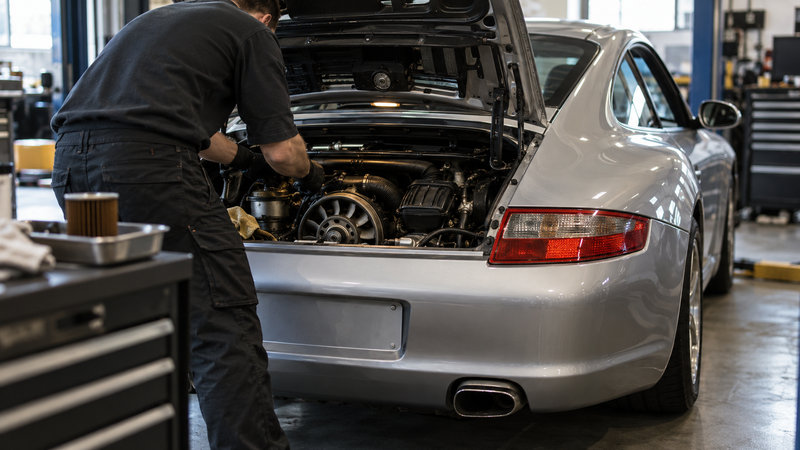
Part of the fun of owning a Porsche is knowing what the car is capable of when everything is working as it should. The sharp handling and unmistakable feel behind the wheel are a big part of why these cars inspire such devoted owners.
If you want to keep that experience intact, you’ll have to pay extra attention when something changes. One issue every Porsche owner should know about is the IMS bearing. A worn bearing can give off subtle signs before it fails. Recognizing those signs could mean the difference between a manageable repair and serious engine damage.
So, what exactly should you be listening and looking for? It starts with understanding the part itself.
What the IMS Bearing Does
Your engine has a crankshaft, the main spinning shaft that turns the up-and-down motion of the pistons into power. It also has camshafts, which open and close the valves that let air and fuel in and exhaust out. The two need to stay perfectly in step, and chains connect them to keep that timing right.
On certain Porsche engines, a part called the intermediate shaft (IMS) sits between the crankshaft and the camshafts and helps drive them. A small bearing holds that shaft in place so it can spin smoothly. That little bearing is the part owners worry about.
When the bearing wears out, the shaft can start to wobble. The timing chains can then lose tension or slip, and the valves and pistons can end up out of sync. In the worst case, they hit each other. That kind of damage usually means rebuilding or replacing the engine.
Much of the problem comes down to how the bearing was designed. Many were sealed and packed with grease instead of being fed a steady supply of engine oil. Over time, that grease can wash out or break down, leaving the bearing to wear faster than the parts around it.
Which Porsche Models Are Affected
IMS bearing concerns are tied to the M96 and M97 engines Porsche used from the late 1990s through 2008. Porsche redesigned its engines for the 2009 model year and removed the intermediate shaft entirely, so later cars don’t carry this risk. The models most often discussed include:
- Porsche 986 Boxster. The first-generation Boxster used the M96 engine for its entire run.
- Porsche 996 911. Every non-turbo 996 used the M96 engine. The Turbo and GT models used a different engine without this bearing.
- Early Porsche 987 Boxster and Cayman. Models built before the 2009 engine update use the M96 or M97 engine.
- Early Porsche 997 911. Non-turbo cars built before 2009 use the M97 engine.
Porsche also changed the bearing itself over the years. The earliest engines used a double-row bearing, which has a much better track record. Most later engines use a single-row version, which is generally considered more likely to fail. The last M97 engines use a larger bearing that holds up better but typically can’t be replaced without taking the engine apart.
That’s why your car’s exact model year and production date are something to pay attention to. A technician familiar with these engines can usually confirm which version you have fairly quickly.
The Sounds Worth Paying Attention To
A failing IMS bearing often makes itself heard before anything else goes wrong. Listen for a low rattle or knock coming from the back of the engine, especially right after startup or while the car sits at idle.
Owners often compare the sound to loose change tumbling around inside a metal can. It may quiet down a bit as the engine warms up, which makes it easy to brush off.
That’s what makes it tricky. Many flat-six engines tick a little when they’re cold, but that sound fades within a few seconds. A bearing problem tends to sound deeper and more rhythmic, and it rises and falls with engine speed instead of going away.
Any new noise from the back of the engine means it’s time to schedule a luxury car diagnostic and repair appointment in Salt Lake City. A qualified technician can quickly get to the source of the sound. Waiting to see if it gets worse only shortens the time you have to fix it.
What Your Oil Filter Can Tell You
Some early warnings don’t come from your ears at all. They come from your oil filter.
During a service, a technician can cut the old filter open and look inside. Tiny flecks of metal caught in the filter can mean something inside the engine is wearing down, often before you’d ever hear or feel a problem.
Many Porsches also have a magnetic drain plug, which pulls metal bits out of the oil as it circulates. A fine, fuzzy buildup on the magnet, especially one that grows from one service to the next, points to the same kind of hidden wear.
Not every shop takes the time to open the filter. Ask for it at each oil change, especially when your car falls in one of the affected years.
You can also send a small oil sample to a lab for testing. The results show how much metal is floating in the oil, which can flag a problem well before it becomes something you’d notice from the driver’s seat.
Vibrations and Changes in How the Car Feels
Some owners notice a faint vibration through the pedals, the shifter, or the seat before any other sign shows up. It usually feels more like a light buzz than a hard shake, so it’s easy to miss on a normal drive.
You’re most likely to feel it at idle or low engine speed. At higher speeds, the engine’s momentum tends to smooth out small wobbles, effectively hiding them.
A vibration like this can also come from simpler causes, like a wheel that’s out of balance or a worn engine mount. Rule those out first. A shop that knows these engines will also check the IMS bearing early in the process instead of saving it for last, which saves you time and money on parts you didn’t need.
When There’s No Warning at All
Sometimes an IMS bearing fails with no noise, no vibration, and no metal in the filter. It simply gives out, and the engine can suffer serious damage in an instant.
That’s the hardest part of this issue, and it’s why watching for symptoms only takes you so far. Many owners of affected models choose to replace the bearing ahead of time with an upgraded version. It’s a planned repair on your schedule, usually done alongside a clutch replacement since much of the same work is involved.
Before you commit, ask your technician a few questions. Confirm which bearing your engine has, whether it can be replaced without opening the engine, and what the upgraded part is designed to fix. A good shop will also look at your oil filter history and the car’s overall condition to help you decide on the right timing.
Compare that to a failure on the road. Once the timing chains slip or metal pieces travel through the engine, the damage spreads far beyond the bearing itself. What should have been a relatively minor repair becomes a complete engine rebuild or replacement.
Catching It Early Protects Your Engine
The IMS bearing can start a domino effect of engine catastrophe, but you don’t have to leave it to luck. Regular filter checks, a good ear for new sounds, and a conversation about preventive replacement give you back control.
At Makes & Models, we look for these exact signs as part of our diagnostics on affected Porsche models, from cutting open the oil filter to listening for the noises that matter. Searching for Porsche auto repair shops near you that know these engines inside and out? Our team brings factory-level diagnostics and clear, honest updates on what we find.
We treat your car like it’s our own track build, and that means catching problems like this one before they turn into expensive ones.