
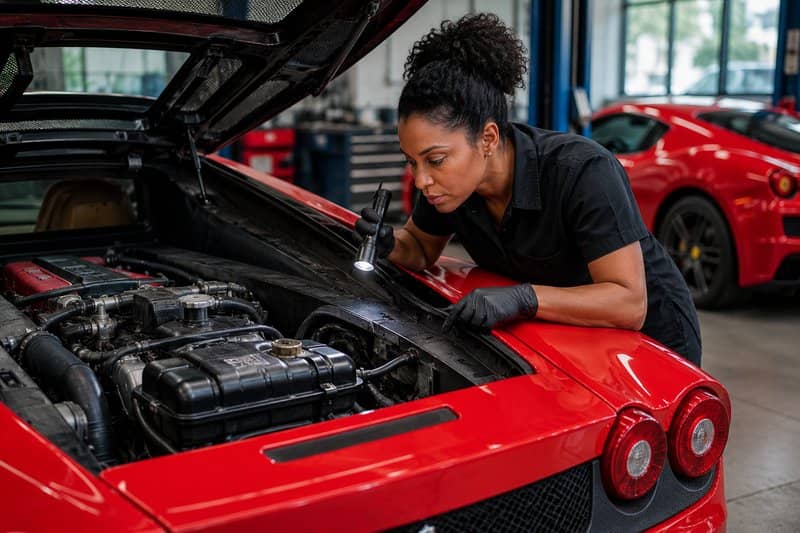
Buying a used Ferrari carries a specific kind of risk most buyers don’t fully account for. The car may run fine on a test drive, feel right at speed, and show no obvious problems. Cooling system damage is among the most expensive issues a Ferrari can develop, and it doesn’t always announce itself before the sale.
Investing in a Ferrari pre-purchase inspection in Salt Lake City changes that calculus entirely. It’s the most reliable way to find what a test drive misses. And on a car like this, finding it before you buy is absolutely vital.
Why Ferrari Cooling Systems Are High-Risk
Ferrari engines are built to produce exceptional performance, which also means they generate a significant amount of heat. To keep temperatures under control, the cooling system must operate exactly as intended. When it receives regular maintenance, it does. When it doesn’t, small cooling issues can quickly turn into expensive mechanical problems.
Many Ferrari models, including the 360, F430, 458, and California, use a mid-engine layout. While this design offers major performance benefits, it also makes cooling more demanding. With the engine positioned in a tighter compartment, airflow is more restricted, and the entire cooling system has to work harder to manage heat effectively.
As these vehicles age, cooling system problems become more likely. That’s especially true if maintenance has been delayed or the car has seen frequent track use.
Components such as the water pump, thermostat, and coolant naturally wear over time, and neglected systems are much more prone to failure. Unfortunately, heat-related engine damage often begins long before obvious warning signs appear, making it difficult to detect without a thorough inspection.
Cooling system repairs on a mid-engine Ferrari are also far more involved than many buyers expect. On models like the F430 and 458 Italia, accessing the radiator often requires removing rear body panels, making even routine repairs labor-intensive. Because of the cost involved, some owners postpone necessary maintenance, leaving future owners to deal with the consequences.
If an overheating problem progresses far enough to require cylinder head repairs or other internal engine work, repair costs rise dramatically. Ferrari V8 and V12 engines use highly specialized components, and the labor required to disassemble, machine, and rebuild these engines adds substantially to the final bill.
For that reason, identifying cooling system issues before purchasing a Ferrari can save you from some of the most expensive repairs associated with exotic car ownership.
Overheating Warning Signs in a Used Ferrari
Going to a shop that specializes in exotic car maintenance near you means you’ll have highly experienced technicians looking at the Ferrari you’re considering buying. These techs can catch evidence of previous overheating before a single diagnostic tool is connected. Of course, there are signs you can look out for, even if you’re not an expert.
Discolored coolant, particularly if it appears brown, rusty, or has a sludgy consistency, indicates the system has run with degraded fluid or experienced internal contamination. Burnt or heat-cracked hoses signal that temperatures exceeded the design range at some point. Staining or residue around the overflow reservoir tells the same story.
Under the hood, examine the radiator fins. Corroded or bent fins restrict airflow and hint at past heat events or poor maintenance. White or gray residue around coolant fittings and connections can indicate weeping leaks or prior overpressure.
Additionally, any fresh sealant applied to coolant system joints deserves real scrutiny. It could mean that a seller found a leak and chose not to repair it properly, instead applying sealant.
Inside the car, an unusual ticking at operating temperature can point to head gasket compromise linked to previous overheating. An engine that reaches operating temperature slowly, or one running warmer than the gauge should show, deserves careful attention before any money changes hands.
The service history is a diagnostic tool in its own right. A Ferrari with significant gaps in its records, or one that was serviced exclusively at shops without exotic vehicle experience, may have had its problems managed rather than resolved. Cooling system entries in the service history, or conspicuously absent ones, often reveal more than the car itself does on a test drive.
What a Pre-Purchase Inspection Covers
A pre-purchase inspection (PPI) performed by a technician with Ferrari-specific experience is far more comprehensive than a standard used car inspection. Because Ferraris are highly specialized vehicles, the inspection is designed to identify costly problems before they become your responsibility.
The cooling system is one of the first areas that should be evaluated. A thorough PPI includes inspecting the radiator, coolant hoses, water pump, thermostat, overflow system, and expansion tank. The technician should also pressure-test the cooling system to uncover small leaks that may not be visible during a basic inspection.
Coolant quality is equally important. The inspection should verify the coolant’s condition and concentration while also testing for combustion gases in the coolant, which can indicate a failing head gasket.
The engine itself requires a deeper evaluation as well. Compression and leakdown tests measure how well each cylinder seals, helping identify internal engine damage that may have resulted from overheating.
In addition, a complete diagnostic scan retrieves both active and stored fault codes, including codes that may have been cleared before the vehicle was listed for sale. Shops without Ferrari-compatible diagnostic equipment often cannot access this information.
A complete PPI should also document the condition of all major fluids, inspect belts and underbody components, evaluate tire wear, and review the vehicle’s service history. Together, these findings provide a much clearer picture of the Ferrari’s overall condition, expected maintenance costs, and any repairs that may justify negotiating a lower purchase price.
Choosing the Right Shop for Your Ferrari PPI
The depth of a Ferrari PPI depends entirely on who’s performing it. Platform-specific diagnostic tools, familiarity with Ferrari’s known failure patterns, and hands-on experience with different model generations shape what the inspection actually covers.
For example, a technician who works on these cars regularly knows which components to prioritize on a 2005 F430 versus a 2014 458 Italia. That knowledge changes the value of what you receive.
For buyers considering Ferrari pre-purchase inspections, choosing a shop with direct European and exotic vehicle experience is worth the effort. Ask whether they have Ferrari-compatible diagnostic software. Ask about their experience with the specific model you’re evaluating.
A shop that provides a written inspection report with photographs stands behind what they found. That document gives you real leverage before the transaction closes.
What the Cooling System Needs After Purchase
A clean PPI result means the car is in good condition at the point of purchase. Keeping it there requires staying ahead of the maintenance intervals Ferrari specifies for cooling system components, not treating them as suggestions.
Always treat coolant flush intervals as firm deadlines. Degraded coolant loses its corrosion inhibitors and heat-transfer properties over time, which accelerates wear inside the system. Water pump and thermostat replacement intervals deserve priority scheduling rather than a wait-and-see approach. They’re particularly important on models with documented early failure patterns in those components.
After track days or extended performance driving, a cooling system check is worth scheduling even when the car shows no obvious warning signs. Heat accumulation from hard use stresses components gradually without always triggering visible symptoms. Catching those changes early, before they become failures, is the maintenance discipline that keeps a Ferrari performing the way it should for the long term.
What that service looks like at a specialist level is different from what most shops provide. A technician familiar with the platform knows the failure history of specific components on specific model years and advises accordingly, rather than simply clearing whatever the service interval calls for. That informed approach applied consistently over the car’s ownership is how a Ferrari stays in the condition it was built to maintain.
Choose Your Ferrari Wisely
A Ferrari is an investment in engineering and performance, but it’s also a vehicle that demands careful evaluation before you buy. Overheating damage can remain hidden until it leads to major repairs. A thorough inspection by a qualified service center is one of the smartest investments you can make during the purchasing process.
Whether you’re considering an F430, 458 Italia, California, or another Ferrari model, take the time to inspect the cooling system, verify the vehicle’s history, and work with a qualified European performance shop. Doing this can save you thousands of dollars (and headaches) in future repairs.
With a thorough inspection, you can avoid inheriting someone else’s overheating problems and make sure your Ferrari delivers the performance and ownership experience you expect.