
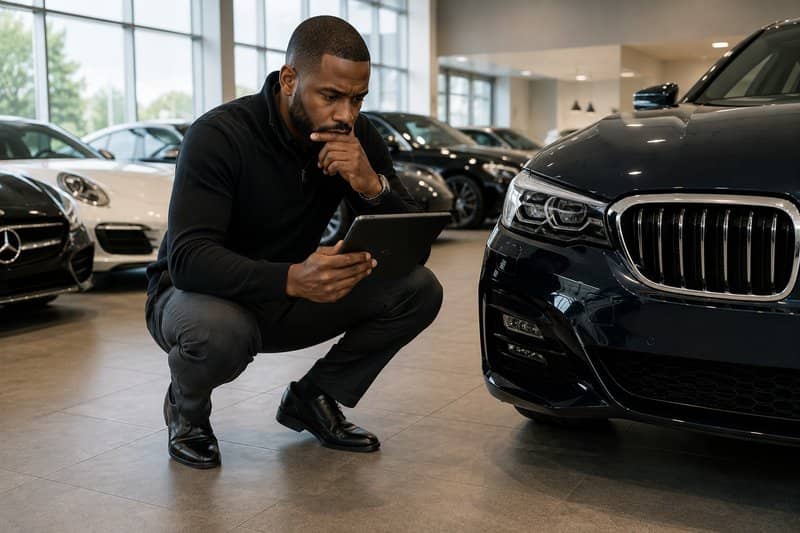
For anyone looking to buy pre-owned luxury cars, the evaluation process matters as much as the vehicle itself. The car that impresses on a first walkthrough isn’t always the one that holds up to scrutiny. Additionally, the gap between a car that looks right and one that genuinely is right can carry significant financial consequences.
Most of what goes wrong with pre-owned luxury purchases is predictable. Experienced buyers work from a consistent evaluation framework, and they apply it before a test drive ever happens. That discipline keeps emotion out of decisions and narrows the field to vehicles that can actually justify their price.
Start With Performance Specs, Not Aesthetics
Experienced buyers evaluate the specifications before they focus on the appearance. Key details like the engine, drivetrain, mileage, and maintenance history provide a much clearer picture of a vehicle’s long-term value than its paint or interior ever will. Looking at these factors first also helps keep emotions from influencing the decision too early.
Engine size, horsepower, and torque are important, but you should always consider them alongside how you’ll actually drive the car. A higher-output engine may seem more appealing, but it can also come with greater maintenance costs or known reliability concerns.
Likewise, turbocharged and naturally aspirated engines have different maintenance needs and wear patterns, making it important to understand the strengths and weaknesses of the specific model you’re considering.
The drivetrain also plays a major role in ownership. All-wheel drive provides added traction and performance in many conditions, but it also introduces more components that require maintenance over time. Rear-wheel-drive vehicles are often simpler to maintain, so buyers should weigh the benefits of each system based on their driving needs.
Never view mileage in isolation. A luxury car with higher mileage and a complete service history is often a better purchase than a lower-mileage example that missed routine maintenance. Experienced buyers look beyond the odometer and use maintenance records to understand how well the vehicle has actually been cared for.
What Service History Actually Tells You
A vehicle’s service history tells an important story about how it has been maintained over the years. Experienced buyers look for consistent maintenance, complete records, and any gaps that could indicate deferred service or unresolved issues.
When shopping through reputable dealerships or luxury car consignment services, buyers often have access to more detailed maintenance records. These records make it easier to verify that the vehicle received the recommended services at the proper intervals.
On the other hand, buyers might come across missing records or questionable repairs performed by shops that aren’t experienced with working on European luxury vehicles. These records often warrant additional questions before moving forward.
Pay close attention to major maintenance items, including timing components, brake fluid, coolant flushes, and transmission service. These services can be expensive on luxury vehicles, which sometimes leads owners to postpone them. Even if deferred maintenance isn’t documented, the costs don’t disappear. They’re simply passed on to the next owner.
It’s also worth reviewing the vehicle’s ownership history. A car that has had fewer owners who kept it for several years is often a better sign than one that has changed hands multiple times in a short period. Frequent ownership changes can sometimes point to ongoing mechanical issues or a history of hard use that wasn’t reflected in the maintenance records.
Calculate Ownership Costs Before You Compare Prices
Two pre-owned luxury vehicles at the same asking price can carry dramatically different total costs over the same ownership period. Experienced buyers look at that math before they narrow their list, not after they’ve made a decision.
Luxury vehicles don’t all lose value at the same rate. Some depreciate quickly during the first few years before their value begins to level off. That can create an opportunity for used-car buyers, since the original owner has already absorbed most of the depreciation.
Other luxury cars retain their value more consistently, which often means used models don’t sell for much less than new ones. Understanding how a particular vehicle typically depreciates can help you determine whether the asking price is a good value.
Maintenance costs vary substantially between European and Japanese luxury platforms. European vehicles typically carry higher service costs per interval, and those differences compound over years of ownership.
Parts pricing and parts availability also vary by model and era, particularly for vehicles that were sold in limited numbers or have since left production. Buyers who don’t account for these costs find themselves surprised by bills that were completely predictable with modest research.
Consider warranty coverage in every comparison. A certified pre-owned vehicle with manufacturer-backed coverage changes the risk profile of the purchase. An as-is sale at a lower price may ultimately cost more if the car requires significant service shortly after purchase. Experienced buyers calculate both scenarios before making the comparison they think they’re making.
Interior Condition and Technology as Investment Signals
The interior of a pre-owned luxury car can reveal a great deal about how it has been driven and maintained. Pay close attention to wear on the driver’s seat, steering wheel, and pedals. If a vehicle advertised with low mileage shows excessive interior wear, it’s worth asking why before moving forward.
Test every electronic feature during your inspection. Check the infotainment system, navigation, speakers, backup cameras, parking sensors, and driver-assistance features to confirm everything works properly. Electrical and technology-related repairs on luxury vehicles can be expensive, so it’s important to identify problems before you buy rather than after the sale.
Technology is another factor that affects long-term value. Luxury vehicles with outdated infotainment systems or older driver-assistance features may be less desirable on the resale market than newer models with updated technology. If you plan to keep the vehicle for several years, this is worth considering as part of your evaluation.
Finally, if the vehicle uses camera-based safety systems, ask whether the windshield or any body panels have been replaced. These systems often require recalibration after repairs. Improper calibration can reduce the accuracy of features such as lane-keeping assistance and forward collision warning, even if no warning lights are displayed.
What the Test Drive and Inspection Confirm
By the time an experienced buyer reaches the test drive, the field of options has gotten quite a bit smaller. The vehicle has passed a review of performance specifications, service history, ownership cost projections, and interior condition. The test drive at that point isn’t discovery. It’s confirmation.
During the drive, listen for sounds that don’t belong: ticking at operating temperature, suspension clunks over uneven surfaces, or hesitation under acceleration. Feel the brake pedal for consistent firmness and the steering for even resistance throughout the full range of motion. Pay attention to how the transmission moves through gears at different throttle inputs.
These are the sensations that records can’t capture, and they tell you whether the car drives the way its history says it should.
A pre-purchase inspection by a qualified technician with specific experience on the platform is the final step and the most important one. The inspection reaches where the test drive can’t: stored fault codes, historical codes cleared before the sale, fluid condition across all systems, cooling system integrity, and the overall mechanical state of the vehicle. For buyers evaluating pre-owned luxury cars, this inspection is what converts a promising purchase into a confident one.
Confirming Your Choice Before You Buy
Buying a pre-owned luxury car is about much more than finding the right price or the right features. Taking the time to evaluate performance specifications, maintenance records, ownership costs, interior condition, and overall mechanical health can help you avoid costly surprises and choose a vehicle that will deliver long-term value.
Before you make a final decision, always schedule a pre-purchase inspection with a technician who has experience working on the specific make and model you’re considering. That inspection will give